12 Slow Stitching and Sashiko Ideas for Everyday Creative Calm
Slow stitching is a wonderful way to reconnect with creativity, find moments of calm and enjoy the simple pleasure of making something by hand.
Whether you’re discovering Sashiko, exploring embroidery or looking for a creative activity to share with others, there are plenty of ways to bring mindful making into everyday life.
The beauty of slow stitching is that it doesn’t require expensive equipment, specialist skills or hours of uninterrupted time. Instead, it invites us to work at our own pace, enjoy the process and appreciate the small details along the way.
Perhaps you’d like to develop a regular creative habit, meet people who share your interests or simply find something enjoyable to do during a quiet moment. Whatever your motivation, these twelve ideas offer practical ways to explore slow stitching, experiment with textiles and discover the joy of making together.
12 Slow Stitching Ideas to Explore
1. Start a Small Portable Slow Stitching Project
One of the easiest ways to enjoy slow stitching is to begin with a small project you can take almost anywhere.
Rather than committing to a large quilt or complicated textile piece, choose something manageable that can be worked on whenever a few spare minutes become available.
A small fabric panel, needle case, decorative sampler or Sashiko-inspired design makes an excellent starting point.
You only need a little fabric, suitable thread, a needle and a pair of scissors. Keep everything together in a small pouch or project bag so it’s ready when inspiration strikes.
For example, you might enjoy adding a few stitches while waiting for an appointment, relaxing during a lunch break or sitting outside with a cup of tea.
Having a portable project also removes some of the pressure associated with finding dedicated creative time. You don’t need to clear the dining table or organise an entire afternoon.
Instead, you can return to your stitching whenever it suits you.
I find having a useful pouch for my latest Sashiko project particularly useful. It means I can take my stitching to CWA meetings, quilting gatherings and other creative get-togethers.
Most importantly, choose something you genuinely enjoy. A portable project should invite you to stitch, not become another obligation.
2. Create a Simple Slow Stitching Ritual Each Week
Developing a regular creative habit can make slow stitching an enjoyable part of everyday life, bringing more creativity into each day.
Rather than waiting for the perfect opportunity, try setting aside a small amount of time each day or week to sit down with your needle and thread.
You might begin with ten or fifteen minutes in the morning, a quiet moment after lunch, a relaxing stitching session before dinner or while watching TV. The amount of time matters far less than creating an opportunity to return to something you enjoy.
To make your ritual inviting, find a comfortable place to sit and keep your materials within easy reach. Perhaps make a cup of tea, put on some favourite music or enjoy the quiet without any distractions.
Over time, these small moments can become something you look forward to.
Sashiko is particularly lovely for this kind of practice. Its repeated running stitches and developing patterns offer an opportunity to concentrate on the movement of the needle, the texture of the fabric and the rhythm of the work.
However, your ritual doesn’t need to follow a strict routine. Some weeks you might stitch every day, while others allow less time.
The important thing is to give yourself permission to enjoy the experience without worrying about productivity.
By making a little space for creativity, you may discover that slow stitching becomes a welcome pause in an otherwise busy day.

Members’ Reward: Workshop Call Out
Be part of our inaugural Members’ Workshop Call Out as we prepare to launch an entire season of workshops!

Be Part of the Launceston Art Society Open Studio Days
Open studio sessions with the Launceston Art Society invite beginners and creatives to explore, create, and connect in a relaxed, welcoming space each month.
Creative Play with Acrylics Workshop
Be part of this Creative Play with Acrylics Workshop with Annette Fuller.
Members: Send in Your Artist Profile and Event News Story
It is a joy to be able to share your artist profile, exhibition news, workshops and art retreat stories here on Art Trails Tasmania, on the blog, in the thriving art lovers’ Community newsletter and across Facebook and Instagram. So be sure to send in your stories!

Empowering Artists with 30 Key Tips for Unleashing the Powers of Newsletters
Unlocking Success with 30 Essential Insights for Artists on Maximising Email Marketing and Newsletter Power.
15 Tips for Selling Success and Thriving on Bluethumb Part 1
Discover 15 tips for financial success and flourishing on Bluethumb, the vibrant online marketplace connecting artists with art buyers in this two part guide by Art Trails Tasmania.
15 Strategies for Artists to Make Money on Etsy and Avoid Common Pitfalls
Discover 15 strategies to boost your income on Etsy, perfect for artists aiming to thrive in the online marketplace & monetise their work.
3. Join a Local Craft, Embroidery or Textile Group
Slow stitching can be wonderfully relaxing when enjoyed alone, but sharing your interest with other makers opens up another dimension of creativity.
Joining a local craft group, embroidery circle, quilting society or textile arts community is a lovely way to meet people who enjoy making things by hand.
You don’t necessarily need to find a group devoted specifically to slow stitching or Sashiko. Many creative communities welcome people working across different disciplines, including knitting, spinning, weaving, embroidery, quilting and textile art. I’ve certainly taken my Sashiko stitching projects along to various types of craft groups.
One of the pleasures of attending these gatherings is discovering how much knowledge and experience people are happy to share. Someone might demonstrate an interesting stitch, recommend a useful resource or introduce you to a technique you haven’t tried before.
Equally, you don’t need to be an experienced maker to participate. Beginners often bring fresh perspectives and enthusiasm, while established makers can offer encouragement and practical advice.
If you’re unsure where to begin, look for local art societies, community centres, libraries, neighbourhood groups and textile associations. Art Trails Tasmania is also a useful starting point for discovering creative groups, artists and workshops.
Above all, choose a welcoming environment where you feel comfortable bringing your own project.
You might arrive knowing nobody and gradually discover friendships, shared interests and opportunities that extend well beyond the stitching table. I’ve been so delighted by the friendships I’ve made this way.
Sometimes, the most valuable part of a creative group is simply having somewhere to belong.
4. Invite a Friend or Family Member to Stitch Together
You don’t need to join an established group to enjoy the social side of slow stitching. Sometimes, all it takes is an invitation to a friend, family member or neighbour to spend an afternoon making something together.
A relaxed stitching catch-up can be as simple as gathering around a kitchen table with a few pieces of fabric, some thread and a pot of tea. Everyone can bring their own project, or you could choose a small activity to try together.
For someone new to stitching, this might be an opportunity to demonstrate a basic running stitch or introduce a simple Sashiko pattern. If your guest already enjoys sewing, you could exchange ideas, compare techniques or work on individual projects while chatting.
The beauty of this arrangement is that there doesn’t need to be a particular outcome. You’re creating time to connect, share experiences and enjoy an activity that doesn’t revolve around screens or busy schedules.
You might even make it a regular monthly or fortnightly gathering.
Over time, these informal creative sessions can become something everyone looks forward to. They also provide an opportunity to pass on skills, encourage experimentation and discover new interests together.
If someone feels hesitant about their abilities, remind them that slow stitching isn’t about producing perfect results.
It’s about enjoying the process.
A few imperfect stitches, an interesting conversation and a shared afternoon can be far more memorable than a perfectly finished project.
5. Take Your Slow Stitching to a Café or Garden
A change of scenery can bring fresh enjoyment to a familiar creative activity. Instead of always stitching at home, why not take your project somewhere that inspires you?
A favourite café, garden, sheltered outdoor space or peaceful park can provide a lovely setting for slow stitching. With a small project pouch, you can enjoy some creative time while taking in your surroundings.
There is something particularly pleasant about combining hand stitching with the sights and sounds of nature. The colours of flowers, changing light, interesting leaf shapes and textures of the landscape can all provide inspiration for future textile projects.
Perhaps you’ll notice a combination of colours that would work beautifully in an embroidery piece or a pattern that reminds you of a traditional Sashiko design.
You don’t need to spend the entire outing stitching, either. Take a few moments to observe your surroundings, enjoy a cuppa or make notes about ideas that come to mind.
Of course, choose a comfortable spot where your materials can be kept safely together. A small pouch helps prevent needles, scissors and threads from becoming misplaced.
If you’re meeting a friend, you could turn the outing into an informal creative catch-up.
The important thing is to give yourself permission to enjoy the experience.
Slow stitching is wonderfully adaptable. It can be enjoyed in a dedicated sewing space, around the kitchen table or wherever you find a little time and inspiration.
6. Attend a Community Craft Afternoon or Maker Gathering
Community craft afternoons and informal maker gatherings are a lovely way to enjoy slow stitching alongside other creative people.
Unlike structured classes, these relaxed sessions allow participants to bring their own projects, exchange ideas and enjoy making together.
Look out for local make-and-mend sessions, textile gatherings, community sewing afternoons or creative meet-ups. Many welcome all skill levels and encourage people to explore different crafts.
You might bring a small Sashiko project and find yourself sitting alongside someone knitting, quilting or experimenting with embroidery. Sharing ideas, asking questions and watching others work can be wonderfully inspiring.
You may even discover a new way to use fabric scraps, learn a different technique or hear about an upcoming workshop.
If there’s nothing happening in your area, why not organise a gathering yourself? A few interested people, somewhere comfortable to meet and a regular time are all you need to get started.
Sometimes, the best creative communities begin with a simple invitation to bring along something you’re making and enjoy an afternoon together.

Art Trails Tasmania: An Artist Led Project
One of the most important features of Art Trails Tasmania is being able to introduce you to a wonderful community of Tasmanian artists, their workshops, exhibitions, creative small businesses, art retreats, events and their stories.
Each month in our free Community newsletter we share their stories directly with you, along side inspiring Creativity Calendar posts and the empowering Skills Sharing Series so you can develop the skills needed to craft the life enriching creative business of your dreams. Enjoy!
7. Explore Sashiko as an Introduction to Slow Stitching
If you’re looking for a beautiful way to explore slow stitching, Sashiko is an excellent technique to discover.
Originating in Japan, Sashiko is a traditional form of decorative stitching historically associated with reinforcing and repairing textiles. It is recognised for its distinctive running stitches, repeated patterns and thoughtful use of line and geometry.
Traditional Sashiko often features white thread on indigo fabric, although contemporary makers explore a much wider range of colours, materials and creative interpretations.
One of the appealing things about learning Sashiko is that you don’t need to begin with complicated designs. Simple patterns provide an opportunity to practise consistent stitches, develop confidence and become familiar with the rhythm of working through fabric.
There is also something wonderfully absorbing about following a pattern across a piece of fabric. Your attention gradually settles on the movement of the needle and the developing design.
For beginners, a guided Sashiko workshop can make learning particularly enjoyable, especially with a friend joining you.
You can discover the materials, understand the basic techniques and ask questions in a supportive environment.
Sashiko also offers opportunities to explore the relationship between traditional textile practices and contemporary creative expression.
8. Give Your Unfinished Slow Stitching Project Time to Grow
One of the most liberating things about slow stitching is realising that a project doesn’t have to be finished quickly.
We often approach creative activities with an expectation that we should complete something within a particular timeframe. However, this can take away some of the pleasure of making, especially when life becomes busy.
Instead, consider giving your unfinished projects permission to take their time.
A piece of Sashiko, embroidery or textile art can develop gradually over weeks or months. You might add a few stitches one afternoon, leave it untouched for a while and return when you feel inspired again.
There is no need to apologise for unfinished work or treat every project as another item on a to-do list.
Sometimes, returning to an older piece brings fresh ideas. You might decide to introduce another colour, change the direction of a pattern or experiment with a different stitch.
Equally, you may discover that a project has served its purpose and you’re ready to move on.
Both outcomes are perfectly acceptable.
Keeping unfinished projects organised can help you enjoy this more relaxed approach. Store each piece with its threads, needles and any pattern notes so you can easily pick it up again. But do not leave needles in the fabric itself.
Remember, slow stitching is about the experience as much as the finished textile.
The time spent experimenting, learning and enjoying the process is part of what makes handmade work so meaningful.
Explore the Artist Collective Peppercorn Gallery
Come explore the inspiring and delightful Peppercorn Gallery in historic Richmond and discover a collective of talented artists and crafters and their creations.
Discover Stitching and Beyond and Their Exciting Workshop Calendar
Discover the vibrant Tasmanian textile artist community of Stitching and Beyond and their exciting calendar of workshops in their Art Trails Tasmania Group Profile story.
Artistry Blooms at the George Town Art and Artisan Shop
Come discover the George Town Art and Artisan Shop in one of Tasmania’s most scenic regions with a thriving and welcoming arts and crafts community.
9. Experiment with Colour, Thread and Fabric Scraps
Exploring different materials is one of the most enjoyable ways to develop your slow stitching practice.
You don’t need to purchase an extensive collection of specialist supplies. In fact, some of the most interesting textile projects begin with materials already sitting in a sewing basket or cupboard.
Start by gathering fabric scraps, leftover embroidery threads, cottons, linens and other suitable materials. Look at the colours, textures and weights, and consider how they might work together.
Perhaps you have remnants from an old sewing project, fabric from a favourite garment or pieces that have been saved because their colours are particularly appealing.
Experimenting with combinations can lead to unexpected results.
For example, you might create a small sampler using contrasting threads, explore tonal stitching or combine different fabric textures to add interest to a textile piece.
You could also create a small collection of stitch samples in a fabric book to record the threads, fabrics and techniques you’ve enjoyed using.
This becomes a useful reference for future projects.
Above all, allow yourself to experiment without worrying about whether every combination works perfectly.
Sometimes an unexpected colour pairing or unusual piece of fabric becomes the starting point for something quite special.
Creative exploration is part of the pleasure of slow stitching.
10. Try Creative Mending and Visible Repair
Slow stitching offers a lovely opportunity to rethink how we care for the textiles we already own.
Rather than automatically discarding a favourite garment or household item when it becomes worn or damaged, consider whether creative mending might give it a new lease on life.
Visible mending is an approach that celebrates repairs rather than attempting to hide them. Using contrasting threads, decorative stitches and interesting fabric patches, you can turn a damaged area into a distinctive feature.
This is where Sashiko has a particularly interesting connection.
Traditional Sashiko developed partly through the practical need to reinforce and repair clothing and household textiles. Today, its stitching techniques continue to inspire contemporary approaches to textile repair and creative mending.
You might use simple running stitches to reinforce a thinning area, add a decorative patch to a well-loved pair of jeans or strengthen fabric around a worn elbow.
However, the first step is to consider the fabric, the type of damage and where it is. Choose suitable materials and stitches that provide the support the item needs.
Beyond the practical benefits, creative mending encourages us to value the history of the things we own.
A repaired garment may carry memories of where it has been, how it has been worn and the care taken to extend its life.
Instead of striving for invisible perfection, you can create something individual and meaningful.
It’s a satisfying way to combine slow stitching, resourcefulness and sustainable making.
11. Share Your Stitching Skills, Stories and Inspiration
One of the most rewarding aspects of being part of a creative community is the opportunity to share what you’ve learned with others.
You don’t need to be an expert or professional textile artist to offer something valuable. Even a small amount of experience can help someone who is just beginning their slow stitching journey.
Perhaps you’ve discovered a useful way to organise threads, found a favourite Sashiko pattern or learned a technique that makes stitching easier. Sharing these discoveries can encourage others to experiment and develop their own skills.
Likewise, listening to other makers can introduce you to ideas you might never have encountered independently.
You might also enjoy documenting your projects, including the materials you used, the techniques you explored and the things you learned along the way.
These stories can be particularly encouraging for beginners because they show that creative confidence develops through practice rather than appearing overnight.
Importantly, sharing doesn’t need to be about producing impressive work or comparing achievements.
It’s about encouraging curiosity, celebrating different approaches and helping others discover the pleasure of making.
When creative knowledge is shared generously, everyone has an opportunity to learn, grow and feel more connected.
12. Find a Workshop or Creative Gathering to Try Something New
Sometimes, the best way to take your slow stitching practice further is to step outside your usual routine and try something new.
A creative workshop offers an opportunity to learn from an experienced artist or maker while enjoying the company of others who share an interest in making.
If you’re curious about Sashiko, for example, a beginner-friendly workshop can introduce you to the materials, traditional patterns and basic stitching techniques in a welcoming environment.
Rather than trying to work everything out independently, you can ask questions, watch demonstrations and receive guidance as you develop your skills.
Workshops also provide a wonderful opportunity to meet other creative people. You might arrive interested in learning a particular technique and leave with new friendships, ideas and inspiration for future projects.
Art Trails Tasmania is a useful place to discover workshops, creative events and opportunities to connect with Tasmanian artists and makers.
Look for an activity that appeals to your interests and experience level. You don’t need to commit to a long course or have a particular outcome in mind.
Sometimes, one afternoon spent learning something new is enough to spark a whole new creative direction.
Give yourself permission to be curious, experiment and enjoy the experience.
You never know where the next creative adventure might lead.
The Joy of Making Art
Explore 15 ways to thrive with the joy of making art so you grow as an artist and maker, explore your creativity and have more joy with Art Trails Tasmania.
Crafting an Ideal Budget Friendly Sketching Kit for Urban & Nature Sketchers
Essential tips for crafting your ideal sketching kit. Balance joy & practicality with brushes, palettes & budget-friendly supplies for urban & nature sketching.
Unlocking Joy with 12 Reasons Why Creative Workshops Transform Lives with Inspiration
How art and craft workshops brings immense joy and fulfilment, serving as a vital counterbalance to the everyday grind in this Creativity Calendar Art Trails Tasmania story.
Making Time for Slow Stitching and Creative Connection
Slow stitching offers so much more than the opportunity to create something beautiful. It gives us a reason to pause, enjoy working with our hands and make room for creativity in everyday life.
Whether you choose to begin with a small portable project, establish a regular stitching ritual, explore Sashiko or join a local creative group, there are plenty of ways to make mindful making part of your routine.
Equally, sharing these experiences with other people can bring unexpected friendships, fresh inspiration and a stronger sense of belonging.
You don’t need to try all twelve ideas at once. Choose one that appeals to you and see where it leads.
Perhaps you’ll discover the pleasure of a few quiet stitches each morning, find a welcoming group of textile enthusiasts or enjoy learning a new technique at a workshop.
The important thing is to begin.
There is no need to hurry, no requirement to produce something perfect and no particular destination you must reach.Just enjoy the process, one stitch at a time.
Ready to explore Sashiko?
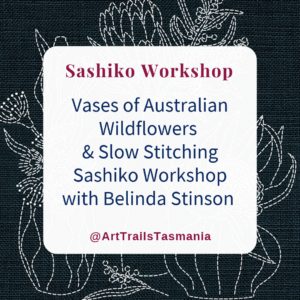
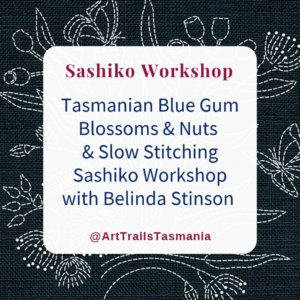
Discover our Australian Wildflowers and Slow Stitches Sashiko workshops and enjoy the opportunity to learn, experiment and create alongside others.
Explore more creative inspiration, workshops and events through Art Trails Tasmania. There are always new opportunities to discover the joy of making and connect with Tasmania’s wonderful creative community.
Read the Latest How To Blog Stories
Empowering Artists with 30 Key Tips for Unleashing the Powers of Newsletters
How to Craft a Power Artist Newsletter Email newsletters are digital communications sent to subscribers' inboxes on a regular basis, typically containing updates, announcements, and exclusive content. For artists, galleries, and creative business owners, newsletters...
15 Tips for Selling Success and Thriving on Bluethumb Part 1
How to Succeed on Bluethumb: Part 1 In this two part series about Bluethumb we take a deep dive into how you can succeed on this art lovers platform that was started in Australia in 2012. Initially conceived as a solution to connect local artists with buyers,...

How to Be a Top Selling Artist on Bluethumb Part 2
How to Financially Succeed on Bluethumb: Part 2 In the second segment of our comprehensive guide to mastering the Bluethumb marketplace, we're delving deep into the intricacies. We'll dissect crucial elements like pricing strategies, product diversity, and the art of...

How to Effectively Promote Your Events on Facebook and Instagram
15 Tips for Promoting Your Events on Facebook and Instagram An artist-led event deserves promotion on Facebook and Instagram due to their unparalleled reach and engagement capabilities. These platforms allow artists to connect directly with their audience, leveraging...
15 Strategies for Artists to Make Money on Etsy and Avoid Common Pitfalls
How to Make An Etsy Store Work Setting up an Etsy store can still be a smart move to make money from your arts and crafts. It can be the ideal channel for testing designs, bringing ideal customers to your own online store, growing your social media profiles, email...
How to Craft Engaging Event News Stories with Chat GPT
The Power of a Well Told Story with Chat GPT Help The power of a well told story is immense, it engages your ideal reader, it inspires action and it opens doors for you - expected and unexpected doors. So it is vitally important to be able to tell the story of your...
Read the Latest Blog Stories and Flourish…

Red for Courage Slow Stitch Celebration with Rita Summers
You're Invited to Be Part of Rita Summer's Cancer Free Celebration Help me celebrate being declared cancer-free after 5 years! Last month, I got the final all-clear. No more scans, no more specialist appointments. So now I want to celebrate! I would love it if you...

“Peak Experiences” an Exhibition Inspired by Wild Tasmania by Mel Hills
Explore the Mel Hills Exhibition "Peak Experiences" Step into a world of misty peaks, glinting waterfalls and alpine wildflowers as Mel Hills unveils her long-awaited mountain celebration series. Inspired by Tasmania’s iconic wilderness these breathtaking paintings...
Discover Creative Freedom Through a Sketchbook Practice Part 1
Nurturing Creativity Sketchbook practice is a creative habit that nurtures confidence, curiosity and exploration, offering artists and crafters a space to play without fear or pressure. This blog story is Part 1 of a two-part series exploring the creative...
Stitching Stories of Colour, Texture and Beauty by Cindy Thompson Exhibition
Textile Artist Exhibition "Stitching Stories" will be exhibited at Sheffield Art Gallery for two months, in August and September. The exhibition will show Cindy's colourful work encompassing many different textile art techniques. There are many items for sale as well...

Kids Creative School Holiday Workshops at St Helens
Calendar of Creative Kids Workshops at St Helens Creative school holiday workshops for kids aged 8–12 at Jane Seychell Gallery, St Helens. Led by professional artists, children can paint a ceramic plate, learn to draw, or decorate cupcakes. All materials included and...
10 Ways to Heal and Flourish with Creativity and Community Part 2
10 Nurturing Paths to Creativity Creativity has been both my refuge and my guide in these tender months of grief and exhaustion. This is Part 2 of a two-part series, where I continue to explore how creativity offers quiet pathways to healing when life feels undone. ...
The Launceston Art Society Calendar of Workshops
The Latest Calendar of Workshops with the LAS The Launceston Art Society is delighted to share with you an inspiring calendar of workshops! From pastels to mixed media to acrylics to oil painting, these workshops are all about developing your skills, whether they're...
Book Review Inspiration: 10 Creative Books for Makers, Artists and Nature Lovers
Book Reviews for Art & Nature Lovers This book review features a wonderful selection of titles published by Search Press Australia, all readily available online. These books are a celebration of creativity across a diverse range of mediums and techniques, making...
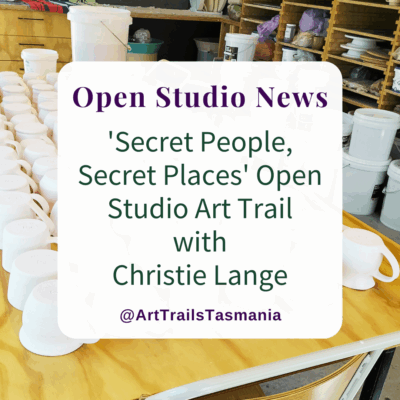
“Secret People, Secret Places” Open Studio Art Trails with Christie Lange
Open Studio Time: Explore the Creative Process with Christie Lange Discover ceramic artist Christie Lange’s open studio during Secret People, Secret Places at the Bay of Fires Winter Arts Festival. Explore porcelain sculptures inspired by Tasmania’s landscapes, meet...
Read What Our Members Say About Belonging
Join the growing, supportive artists community today and have your Artist story told here.
Belinda is doing a great job creating a professional looking artist hub online. Check out the profile I posted recently to see how well she does them. To all my artist friends let’s help make this THE go to place to discover local artists.
You won’t regret joining Art Trails Tasmania . It’s a welcoming community for creatives at any career stage.Becoming an Art Trails Tasmania member wasn’t a hard decision for me to make as it’s such a wealth of knowledge and support.Being member provides a quality way to showcase your creative endeavours and it’s quickly growing in reach.
We operate a home based picture framing business and recently joined Art Trails Tasmania as a means to giving us exposure to the wider artist community. We have almost immediately seen increase in activity thru our online sites, which I am certain will lead to more opportunities to grow our business.