Exploring Your Creativity with 12 Gentle Ways
Explore your creativity by allowing your surroundings to become a steady and generous source of inspiration, where even the most familiar details begin to reveal new possibilities when you slow down enough to notice them.
When you engage with your environment in an intentional way, it becomes easier to return to your creative practice, weaving together your favourite mediums, like textiles, mixed media, watercolour, oils, pastels and coloured pencil into a rhythm that supports not only your skills, but your sense of calm, curiosity and joy in making.
For a more reflective beginning to this journey, visit How Nature Shapes the Way You See, Feel and Imagine Part 1, where you’ll discover how nature supports perception, focus and imagination within your creative practice.
Beginning with What Is Already Here
There is a quiet relief in realising you don’t need to wait for the “right” time, the “right” place, or even the “right” idea to begin again.
Your environment — as it is, right now — holds more than enough to support your creative thinking.
The key is not in changing your surroundings, but in changing how you notice them. When you begin to observe with intention, ordinary things begin to feel layered, textured, full of possibility.
This is where a sustainable creative practice begins. Not in big bursts of inspiration, but in the steady return to noticing, responding, and making.
Each of the following 12 approaches is designed to help you explore your creativity in a way that feels grounded, practical and deeply supportive of your ongoing practice.
1. Let One Small Thing Hold Your Full Attention
Rather than feeling overwhelmed by everything around you, choose just one small element each day to focus on.
This might be a single leaf, the curve of a shadow across a surface, the way fabric folds, or even the subtle variation of colour in a wall or object.
Spend time really looking at it — longer than feels natural at first. Notice how many colours are actually present, how edges soften or sharpen, how light interacts with the surface. Then translate this into your sketchbook.
In watercolour, you might explore soft transitions of colour. With coloured pencil, you can layer tones slowly to build depth.
Pastels allow you to capture softness and atmosphere, while oils give you time to adjust and refine.
In textiles, you might interpret the same subject through stitched lines or layered fabrics.
The goal here is not to create a finished artwork, but to deepen your observation skills.
Over time, this practice trains your eye to see more clearly and more richly, which naturally strengthens your creative work and voice across all mediums.
2. Keep a Thoughtfully Curated Portable Creative Kit
A portable creative kit is one of the most practical ways to ensure you can respond to inspiration when it appears, rather than needing to wait until you are back in your main workspace.
The key is to keep it simple and intentional. A small sketchbook, a limited palette of watercolours, a few coloured pencils, perhaps a soft pastel or two, and for those working in textiles, a small pouch with thread, needles and fabric scraps.
Including mixed media elements such as glue, collage papers or found materials can also expand your possibilities without adding bulk.
What matters most is that your kit feels inviting rather than overwhelming.
When your materials are easy to access, it becomes far more natural to pause and make something, even if only for a few minutes.
This small shift — from preparation to readiness — can have a profound impact on how often you engage with your creative practice.
Spring Stitching Retreat
Join Stitches from Cindersplace for a Spring Stitching Retreat in beautiful Sheffield, Tasmania, with four days of wool applique, learning and creativity too.
Plein Air Oil Painting Weekend Workshop with Katrina Pullin
Explore something new with this two day plein air oil painting weekend workshop with Katrina Pullin based at the Oatlands Gallery 102 & discover the joys of painting outside.
Members: Send in Your Artist Profile and Event News Story
It is a joy to be able to share your artist profile, exhibition news, workshops and art retreat stories here on Art Trails Tasmania, on the blog, in the thriving art lovers’ Community newsletter and across Facebook and Instagram. So be sure to send in your stories!

How to Make the Most of Entering Exhibitions Like the Incognito Art Show
Discover how to make the most of the opportunity of entering the Incognito Art Show so you can grow your Artist Profile, find new supporters and buyers and flourish!
How to Flourish Financially and Creatively with Markets and Fairs Part 1
In Part 1 of our series we look at how markets and fairs can be a great way to bring in money and grow creatively.
3. Work Intentionally with Natural Colour Palettes
Your environment offers an endless supply of colour palettes that are already harmonious, balanced and subtly complex.
Begin by observing colours more closely. Notice how greens are rarely just green — they contain hints of yellow, blue, grey, even brown.
Shadows often hold unexpected purples or cool blues. Light can warm or soften colours in ways that are easy to overlook.
Try creating small colour studies in your sketchbook. In watercolour, mix and test variations.
In oils, spend time blending to match what you see. With coloured pencil, layer gradually to build richness. Pastels allow for quick, expressive exploration of tone.
For textile artists, this might mean selecting threads and fabrics that echo these natural combinations, building palettes that feel cohesive without being predictable.
Over time, this practice refines your colour sensitivity and helps you move away from default or habitual choices, opening up a more nuanced and personal approach to colour in your work.
4. Translate Texture Rather Than Copy It
Texture is one of the most engaging elements in both nature and art, and it translates beautifully across all mediums.
Instead of trying to replicate texture exactly, focus on capturing the feeling of it. Is it rough, soft, layered, worn, smooth, irregular?
In mixed media, you can build texture through layering materials — paper, fabric, paint, stitching.
In textiles, stitched marks can echo natural patterns such as bark or leaves.
Pastels can be applied lightly or heavily to suggest different surfaces, while oils allow for both smooth blending and thicker, more tactile application.
Try experimenting with different approaches in your sketchbook. Make small studies where you explore one texture in multiple ways, using different mediums.
This kind of exploration builds a visual and tactile vocabulary that you can draw on later, enriching your work with depth and variety.
5. Use Your Sketchbook as a Space for Exploration, Not Perfection
It is easy to fall into the trap of wanting your sketchbook to look “good,” but its true value lies in its freedom.
Allow your sketchbook to be a place where ideas are tested, where mistakes are made, where mediums are combined without concern for outcome.
A page might begin with a watercolour wash, be layered with coloured pencil, then stitched into or collaged over.
Include notes alongside your visual work — what you noticed, what worked, what didn’t. This turns your sketchbook into both a creative and reflective tool.
By removing the expectation of perfection, you create space for genuine exploration. And it is within that space that new ideas and directions often emerge.
Art Trails Tasmania: An Artist Led Project
One of the most important features of Art Trails Tasmania is being able to introduce you to a wonderful community of Tasmanian artists, their workshops, exhibitions, creative small businesses, art retreats, events and their stories.
Each month in our free Community newsletter we share their stories directly with you, along side inspiring Creativity Calendar posts and the empowering Skills Sharing Series so you can develop the skills needed to craft the life enriching creative business of your dreams. Enjoy!
6. Establish a Creative Ritual That Feels Supportive
A creative ritual does not need to be complex or time-consuming to be effective. What matters is consistency and a sense of ease.
Choose a time and place that feels accessible. It might be ten minutes in the morning with a cuppa, or a quiet moment in the afternoon. Pair this time with a simple creative action — a quick sketch, a small textile piece, a colour study.
Working across different mediums can keep this ritual engaging. One day might be watercolour, the next coloured pencil, the next a small mixed media exploration.
Over time, this ritual becomes a familiar and welcoming part of your day, making it easier to return to your creative practice even when motivation is low.
7. Let Changing Light Become a Daily Study
Light is one of the most dynamic and accessible elements in your environment, and studying it can significantly deepen your understanding of tone, colour and atmosphere.
Choose a single location and observe it at different times of day. Notice how shadows shift, how colours warm or cool, how contrast increases or softens.
Capture these changes in your sketchbook using different mediums. Watercolour is particularly effective for soft transitions, while oils allow for richer, layered exploration. Pastels can quickly capture mood and light quality, and coloured pencil can refine details.
This ongoing study not only improves technical skills but also encourages you to see your environment as something alive and constantly changing.
8. Set Gentle, Intentional Creative Challenges
Challenges can provide direction, especially when you are unsure where to begin. The key is to keep them manageable and open-ended.
For example, you might decide to explore one subject using three different mediums, or limit your palette to a few colours for a week. You could focus on texture, or on creating small daily pieces.
These constraints encourage creative problem-solving and help you move beyond familiar patterns in your work.
Importantly, they also give your practice a sense of purpose without becoming restrictive, supporting both growth and enjoyment.
9. Bring Mindfulness Into Your Making Process
Creative practice can become a powerful form of mindfulness when you allow yourself to fully engage with the process rather than focusing on the outcome.
Pay attention to the physical sensations of working — the movement of your hand, the feel of materials, the rhythm of stitching or brushstrokes.
Let your environment support this awareness. Notice sounds, light, and atmosphere as you work.
This approach not only enhances your experience but can also reduce stress and increase your sense of connection to your practice, making it something you look forward to returning to.
Denise Cox Finds Joy Through Expressive Colourful Art
It’s time to meet artist Denise Cox as she shares her joy and solace found through expressive and colourful art in her Artist Profile story with Art Trails Tasmania.
Tasmanian Craft Fair Celebrating Community & Creativity
Explore the vibrant arts & crafts community of Deloraine with the Tasmanian Craft Fair and be part of celebrating creativity, community and making!
Stephen Bond’s Journey as a Sculptor
Meet Stephen Bond and explore his love for sculpture through out a varied creative life, from musician to sculptor to painter along a curvaceous journey.
10. Reflect Regularly to Deepen Your Practice
Reflection is an often overlooked but essential part of creative growth.
Set aside time to look through your sketchbook and recent work. Notice patterns — recurring colours, subjects, techniques. Consider what felt engaging and what felt challenging.
Write brief notes about your observations. This helps clarify your direction and can guide future explorations.
Reflection turns your creative practice into an ongoing conversation with yourself, deepening both understanding and intention.
11. Turn Everyday Movement into Creative Input
Movement through your environment — whether walking, travelling, or simply going about your day — offers a steady stream of visual and sensory input.
Instead of moving through these moments passively, begin to notice them more actively. Pay attention to patterns, compositions, colours, and textures.
You might make quick notes or sketches, or simply hold these observations until you return to your sketchbook.
Later, translate these impressions into your work using your chosen mediums. This process connects your daily life with your creative practice, making inspiration more accessible and continuous.
12. Reignite Your Practice Through Play and Curiosity
When your creative energy feels low, returning to play can be one of the most effective ways to reconnect.
Set aside expectations and allow yourself to experiment freely. Combine mediums in unexpected ways, try new techniques, or revisit familiar ones with a different approach.
Let your environment guide you, but without the need to interpret it directly. Focus instead on what feels interesting or enjoyable in the moment.
Playfulness brings lightness back into your practice, often leading to new ideas and renewed motivation.
Bringing It All Together as an Intentional Practice
To explore your creativity through your environment is to build a practice that is both intentional and adaptable.
Your sketchbook becomes a central space for exploration. Your daily rituals provide gentle structure. Your chosen mediums — textiles, mixed media, watercolour, oils, pastels and coloured pencil — offer diverse ways to respond.
And your environment, in all its quiet detail, becomes a constant source of inspiration.
Over time, these elements come together to form a creative practice that supports not only your artistic growth, but your sense of wellbeing, presence and connection.
It becomes something you return to not out of obligation, but because it feels like home.
10 Ways to Explore Your Creativity with a Sketchbook Practice Part 2
In Part 2 of our series on exploring your artistry with a sketchbook practice we share 10 inspiring ideas to get stuck into on your path to daily creativity.
Discover Creative Freedom Through a Sketchbook Practice Part 1
Discover the joys of sketchbook practice in Part 1 of our series – explore materials, methods, and creative freedom for artists and crafters.
Read the Latest How To Blog Stories
How Artists Can Build Their Digital Eco-System for Branding Success
7 Ways to Grow Your Digital Eco-System with Effective Branding A cohesive digital eco-system and branding approach essential for artists, makers, creative business owners, and art groups to establish a recognisable presence across multiple platforms. Here are seven...
15 Tips for Artists to Master Redbubble to Boost Sales & Visibility
Discover Redbubble: Where Artists Thrive, Buyers Explore, Creations Shine Redbubble is an online marketplace that enables artists to sell their artwork printed on various products, including clothing, stickers, phone cases, and home decor. It's a platform for both...
How to Be Part of 3 Bonus Curated Blog Stories When You Renew Your Membership
Saying Thank You to Renewing Members with Three Curated Blog Stories As a thank you for renewing your Art Trails Tasmania membership for another year I thought being part of a series of three member focused blog stories would be a delightful gift from me to you. I’ve...
How to Connect with Authors and Publishers to Ignite Your Creative Income
How to Create an Income as an Illustrator of Books Are you eager to merge your creativity with storytelling? Illustrating books by connecting with authors and publishers offers an exciting dive into the art and literature world while also generating an income. ...
Empowering Artists with 30 Key Tips for Unleashing the Powers of Newsletters
How to Craft a Power Artist Newsletter Email newsletters are digital communications sent to subscribers' inboxes on a regular basis, typically containing updates, announcements, and exclusive content. For artists, galleries, and creative business owners, newsletters...
15 Tips for Selling Success and Thriving on Bluethumb Part 1
How to Succeed on Bluethumb: Part 1 In this two part series about Bluethumb we take a deep dive into how you can succeed on this art lovers platform that was started in Australia in 2012. Initially conceived as a solution to connect local artists with buyers,...
Read the Latest Blog Stories and Flourish…
The Launceston Art Society Inspirations Exhibition
You're Invited to attend the Launceston Art Society's "Inspirations" Exhibition The Launceston Art Society proudly presents “Inspirations”, a community art exhibition showcasing the diverse talents of local members, with visitors invited to vote for their favourite...
How Rest Fuels Creativity: Boredom, Sleep & Daydreaming Part 1
Why Boredom, Sleep, and Daydreaming Fuel Creativity Creativity is not confined to bursts of high energy or moments of intense focus; creativity also thrives in quieter spaces, where creativity grows naturally as the resting mind nurtures creativity through calm,...
Textile Art Workshops with Stitching and Beyond
Textile Art Workshops to Inspire Workshops are central to Stitching and Beyond’s creative programme, giving textile artists and makers the chance to explore new techniques and ideas. This latest calendar of workshops from October to January, highlights the richness of...
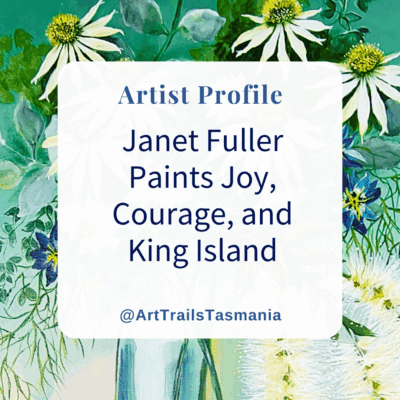
Janet Fuller Paints Joy, Courage & King Island
Inspiration is Everywhere on King Island I love it when things just work. That one amazing brushstroke that elevates the ordinary to something that makes you go "wow, that's it". When colours come together in a way that's so bold they explode off the canvas, or so...

The Launceston Heritage Sketch 2025
An Art Competition for All Kinder to Year 12 Launceston is a city steeped in history, nestled amidst breathtaking natural landscapes, and filled with vibrant neighbourhoods and cherished landmarks. This competition invites budding young creatives of all skill levels...
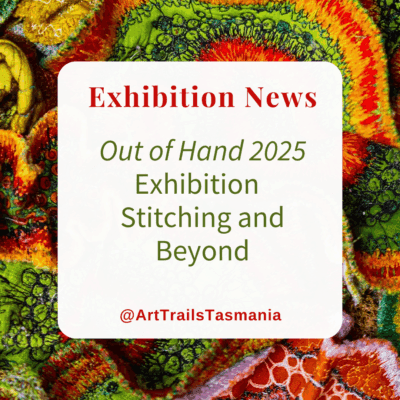
The Stitching and Beyond Out of Hand Exhibition
Be Inspired by the "Out of Hand" Exhibition by Stitching and Beyond Members This year marks the 20th anniversary of Stitching and Beyond, so to celebrate we are putting on our best Out of Hand exhibition EVER!! Enjoy a wonderful collection of fibre, paper and textile...
10 Ways to Explore Your Creativity with a Sketchbook Practice Part 2
10 Sketchbook Practice Ideas A sketchbook is more than just blank pages – it’s a space where curiosity, play, and experimentation come together. In Part One, we explored why sketchbooks are such a powerful tool for creative exploration. If you missed it, you can read...
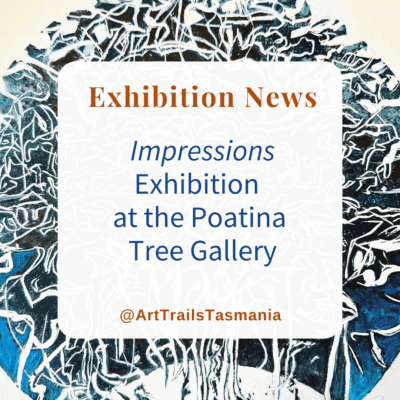
Impressions Exhibition at the Poatina Tree Gallery
You're Invited to attend the Poatina Tree Gallery Impressions Exhibition Artists Justine Vaughan, Gaynor Peaty, Rosa MacManemy, Jacqueline Senior, Julie Irvin and Elizabeth Royce are the Newfields Printmakers and invite you to their "Impressions" exhibition. Based in...
Red for Courage Slow Stitch Celebration with Rita Summers
You're Invited to Be Part of Rita Summer's Cancer Free Celebration Help me celebrate being declared cancer-free after 5 years! Last month, I got the final all-clear. No more scans, no more specialist appointments. So now I want to celebrate! I would love it if you...
Read What Our Members Say About Belonging
Join the growing, supportive artists community today and have your Artist story told here.
Belinda is doing a great job creating a professional looking artist hub online. Check out the profile I posted recently to see how well she does them. To all my artist friends let’s help make this THE go to place to discover local artists.
You won’t regret joining Art Trails Tasmania . It’s a welcoming community for creatives at any career stage.Becoming an Art Trails Tasmania member wasn’t a hard decision for me to make as it’s such a wealth of knowledge and support.Being member provides a quality way to showcase your creative endeavours and it’s quickly growing in reach.
We operate a home based picture framing business and recently joined Art Trails Tasmania as a means to giving us exposure to the wider artist community. We have almost immediately seen increase in activity thru our online sites, which I am certain will lead to more opportunities to grow our business.