How Constraints Can Become Powerful Catalysts for Creative Growth
Explore your creativity by looking differently at the limitations that shape your creative practice, because constraints are often misunderstood as obstacles when they can instead act as powerful allies.
Time pressures, limited materials, small budgets, narrow formats or a lack of experience can feel discouraging, yet they frequently sharpen focus and reduce overwhelm. When choices are narrowed, attention deepens.
Rather than blocking ideas, constraints often create the conditions where curiosity, experimentation and confidence can quietly take root.
Seeing Constraints as Creative Containers
Constraints define an edge, and edges are where energy gathers. Without some form of boundary, creative attention can drift.
A constraint offers something solid to work against, a container that holds your focus steady.
Across creative disciplines, artists have long worked within limits.
A fixed loom width in textiles, a limited colour palette in painting, a roll of film in photography or the physical resistance of sculptural materials all provide structure.
Within that structure, creativity is not diminished but concentrated.
Seeing constraints as containers rather than barriers can fundamentally change how you approach your practice.
The Problem With Unlimited Choice
Having unlimited options may sound ideal, but it often leads to hesitation. Too many materials, ideas or directions can create noise that makes it difficult to begin.
When everything is possible, nothing feels anchored.
Decision fatigue sets in before the work even starts. By contrast, a reduced set of choices allows the mind to settle.
The question shifts from What should I do? to What can I explore here?
This shift creates momentum and makes creativity feel more accessible.
How Constraints Reduce Decision Fatigue
Decision fatigue drains creative energy. Every choice requires mental effort, and too many choices can exhaust that energy before it is used for making.
Limiting materials, formats or time removes unnecessary decisions.
A watercolour practice using only three colours, a sketchbook devoted to graphite and ink, or a textile project using only hand stitching are examples of how constraints simplify engagement.
With fewer decisions to make, attention can move towards observation, experimentation and play.
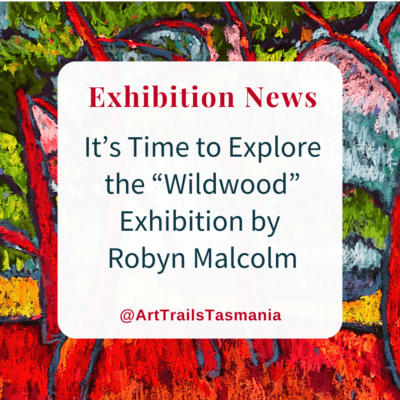
Wildwood Art Exhibition by Robyn Malcolm
Explore WILDWOOD, an exhibition of richly coloured tree paintings by Robyn Malcolm, revealing her mastery of pastel and oil and her instinctive use of colour.
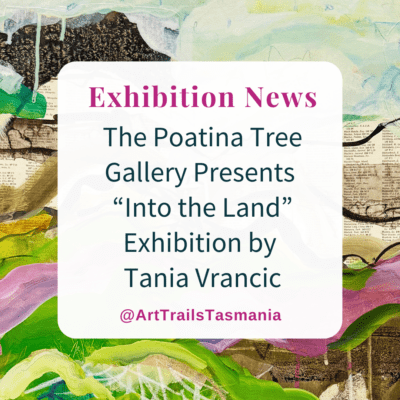
The Poatina Tree Gallery Presents “Into the Land” Exhibition
Poatina Tree Art Gallery hosts Into the Land, an exhibition exploring abstract landscapes shaped by immersion in nature and mountain foothills.
Art Trails Tasmania: An Artist Led Project
One of the most important features of Art Trails Tasmania is being able to introduce you to a wonderful community of Tasmanian artists, their workshops, exhibitions, creative small businesses, art retreats, events and their stories.
Each month in our free Community newsletter we share their stories directly with you, along side inspiring Creativity Calendar posts and the empowering Skills Sharing Series so you can develop the skills needed to craft the life enriching creative business of your dreams. Enjoy!
Why a Creative Business is Essential for Artists & Makers Part 1
Discover why building a creative business with multiple income streams is vital for artists & makers in this 2 part series. Learn how to grow & sustain your creativity.
How Open Studio Art Trails Help Artists Connect and Grow Part 1
Find out how Open Studio Art Trails can help grow your profile as an artist, open doors to new opportunities and to thrive creatively.
Time as a Supportive Boundary
Time is often seen as the greatest obstacle to creativity, yet it can also be one of the most supportive constraints. Short, regular sessions encourage consistency without pressure.
Knowing you have a defined amount of time can quiet perfectionism.
There is less temptation to overwork or overthink. A 20-minute pastel study, a quick oil sketch or a brief photography walk becomes achievable.
Over time, these small sessions build rhythm and trust in your ability to return to your work.
Working Small to Think Deeply
Scale is another powerful constraint. Working small encourages intimacy and experimentation.
Small textile samples invite playful stitch exploration. Small watercolour studies allow rapid testing of colour relationships.
Compact sculptural forms encourage focus on structure and balance. Working small lowers the stakes and increases freedom.
Rather than aiming for finished pieces, small-scale work supports learning and discovery.
Financial and Material Limits Encourage Ingenuity
Creative work does not require endless supplies. In fact, financial and material constraints often lead to greater innovation.
Using leftover paint, fabric scraps, found objects or existing photographic equipment builds problem-solving skills and deepens understanding of materials.
These limitations encourage careful observation and thoughtful use rather than excess.
They also foster sustainability and resourcefulness, which can become integral parts of a creative identity.
Experience Level as an Advantage
A lack of experience can be a gift. Without rigid expectations, beginners approach materials with curiosity and openness.
Trying unfamiliar combinations, such as stitching into paper, layering photography with drawing, or combining oils with collage, often leads to unexpected results. These explorations are driven by curiosity rather than correctness.
Constraints of experience allow learning to happen through doing rather than analysis.
Format and Medium as Focus Tools
Choosing to work within a single format or medium for a period of time can greatly support creative development. Repetition builds fluency.
A month working only in a sketchbook, a series of textile panels of the same size, or repeated photographic studies of a familiar subject all encourage deeper exploration. Subtle variations begin to emerge, revealing preferences and interests.
This process supports the gradual emergence of a personal creative voice.
The Role of Daily Creative Rituals
Rituals provide a sense of continuity and care. They signal that creativity matters and has a place in your life.
Simple rituals such as preparing materials, working at the same time each day or beginning with a familiar warm-up help reduce resistance.
When combined with constraints, rituals make creativity feel approachable and grounded.
Over time, these practices build confidence and resilience.
The Sketchbook as a Space for Exploration
A sketchbook is an ideal place to work with constraints. It allows experimentation without the pressure of producing finished work.
You might limit yourself to one tool per page, repeat the same subject in different mediums or explore variations of a single idea.
Use it to plan textile work, test colour for painting, reflect on sculptural forms or develop photographic concepts.
The sketchbook becomes a companion to your thinking.
Intentional Practice and Creative Voice
Intentional practice means making conscious choices about how you engage with your creativity. Constraints clarify those choices.
By narrowing focus, patterns begin to emerge. You notice which materials excite you, which processes feel satisfying and which ideas you return to.
These observations form the foundation of your creative voice.
Voice is not something you find; it is something that emerges through sustained, attentive practice.
Constraints as Flexible Invitations
Constraints work best when they are flexible. They are invitations to explore, not rules to obey.
They can be adapted, softened or abandoned as your needs change. Their purpose is to support curiosity and joy, not enforce control.
When used with intention, constraints help you explore your creativity with greater confidence, focus and pleasure.
Emma Pilgrim Reveals Charity Collaboration as Artist Supports Wildlife Conservation
Charity collaboration has shaped Tasmanian artist Emma Pilgrim’s return to painting, driven by wildlife care, creativity & a deep commitment to meaningful impact.
Art, Flow & Purpose: Meg Shaw’s Creative Journey
Meg Shaw shares how art brings her joy, purpose and freedom. Inspired by Tasmania’s beauty, she finds creative flow and self-expression through painting.
Read the Latest How To Blog Stories
10 Helpful Tips to Grow Your Blog Audience and Flourish Part 2
Unlocking the Power of Your Blog Unlock the true potential of your creative journey with this blog, the exciting Part 2 in our series. Following on from How a Blog Builds Your Creative Artist Profile Part 1, this instalment offers fresh tips to sharpen your blogging...
How a Blog Builds Your Creative Artist Profile and Income – Part 1
How A Blog Can Make All the Difference A blog is a powerful tool for artists, makers, and groups looking to grow their creative profile and support income-generating activities. It helps promote exhibitions, sell work online, attract workshop bookings, and showcase...
8 Elements Needed For Your Successful Content Plan – Part 2
The 8 Essential Elements for Making a Successful Content Plan A content plan is your creative map for sharing your work with confidence, ease and clarity. This is Part 2 of our two-part series on creating a content plan for artists, makers, galleries, art groups and...
Why Every Artist and Creative Business Needs a Clear, Simple Content Plan – Part 1
How to Make Sense of Content Plans A content plan is the key to sharing your creative work and business with ease and confidence, across all your platforms and projects. This is Part 1 of a two-part series on content planning for artists, makers, galleries, event...
15 Practical Ways to Effective Promote Your Art Exhibitions Part 2
15 Practical Ways to Promote Your Art Exhibitions In Part 1 on how to make your art exhibitions successful we looked at the features, elements and ways to create an engaging, vibrant and profitable event. Here in Part 2 we delve into the all important promoting and...
How to Make Art Exhibitions Creative, Engaging and Profitable Part 1
How to Make Art Exhibitions Enjoyable, Profitable and Vibrant Creating successful art exhibitions means more than just hanging work on a wall. And when done well, all involve benefit creatively, financially and professionally. As with all things in life it is much...
Read the Latest Blog Stories and Flourish…
Flourish with Clay with Ceramist Artist Christie Lange Calendar of Workshops
Fall in Love with Clay with Award Winning Ceramist Artist Christie Lange It is time to get your hands dirty with clay and create something gorgeous with Christie Lange in her thoughtfully curated calendar of workshops. Pick your workshop from a range of five...
12 Rituals of Rest That Spark Fresh Creative Energy Part 2
Finding Joy in Restful Creativity Creativity does not thrive on constant motion; it flourishes when given space to breathe. Rest is not absence, but a quiet resource that renews energy, focus, and imagination. Where Part 1 explored how boredom, sleep, and daydreaming...
Rachel Harris Creates Art That Sparks Connection and Care for Wildlife
A Sense of Wonder Inspires Creativity Living in Tasmania, it’s impossible not to be inspired by the wild. I grew up in New Zealand, and even after many years on Hobart's eastern shore I’m still in awe of the unique wildlife found only on this island. Each encounter is...
Join the Inspiring Mel Hills for Immersive Sketching Workshop Experiences
The Latest Calendar of Workshops with Mel Hills There’s nothing quite like a workshop that invites you to slow down, observe, and reconnect with the world around you. Artist and teacher Mel Hills, well-loved for her warm teaching style and passion for nature, brings...
The Launceston Art Society Inspirations Exhibition
You're Invited to attend the Launceston Art Society's "Inspirations" Exhibition The Launceston Art Society proudly presents “Inspirations”, a community art exhibition showcasing the diverse talents of local members, with visitors invited to vote for their favourite...
How Rest Fuels Creativity: Boredom, Sleep & Daydreaming Part 1
Why Boredom, Sleep, and Daydreaming Fuel Creativity Creativity is not confined to bursts of high energy or moments of intense focus; creativity also thrives in quieter spaces, where creativity grows naturally as the resting mind nurtures creativity through calm,...
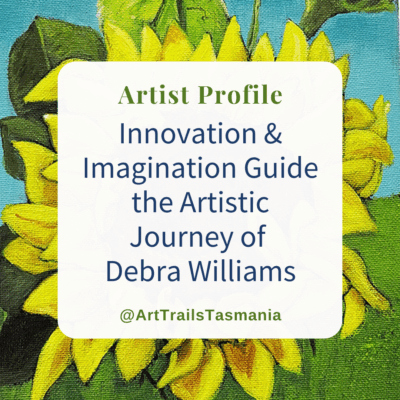
Innovation and Imagination Guide the Artistic Journey of Debra Williams
Being Brave with Your Artistic Journey I strive to create an outcome that I have envisaged, but sometimes the art takes me into a different sphere, and the outcome is better. I love experimenting with different media. This month, I have a large portrait entered in a...
Textile Art Workshops with Stitching and Beyond
Textile Art Workshops to Inspire Workshops are central to Stitching and Beyond’s creative programme, giving textile artists and makers the chance to explore new techniques and ideas. This latest calendar of workshops from October to January, highlights the richness of...
Janet Fuller Paints Joy, Courage & King Island
Inspiration is Everywhere on King Island I love it when things just work. That one amazing brushstroke that elevates the ordinary to something that makes you go "wow, that's it". When colours come together in a way that's so bold they explode off the canvas, or so...
Read What Our Members Say About Belonging
Join the growing, supportive artists community today and have your Artist story told here.
Belinda is doing a great job creating a professional looking artist hub online. Check out the profile I posted recently to see how well she does them. To all my artist friends let’s help make this THE go to place to discover local artists.
You won’t regret joining Art Trails Tasmania . It’s a welcoming community for creatives at any career stage.Becoming an Art Trails Tasmania member wasn’t a hard decision for me to make as it’s such a wealth of knowledge and support.Being member provides a quality way to showcase your creative endeavours and it’s quickly growing in reach.
We operate a home based picture framing business and recently joined Art Trails Tasmania as a means to giving us exposure to the wider artist community. We have almost immediately seen increase in activity thru our online sites, which I am certain will lead to more opportunities to grow our business.