12 Ways to Explore Your Creativity Ideas
Exploring different mediums can bring fresh energy, curiosity and possibility into your creative practice.
Whether you are an artist, maker or simply someone who loves creating, experimenting with new materials and approaches can help you discover ideas that may have been waiting beneath the surface.
Creativity thrives when there is space for play, learning and discovery. You do not need to abandon your current style or methods; instead, you can expand your skills, strengthen your confidence and uncover new ways to express your unique creative voice.
In Part One, we drived into why Exploring Your Creativity Through Different Art and Craft Mediums can be so helpful for reigniting your creative practice and building the confidence to explore new ideas.
1. Combine Materials to Create Unexpected Connections
One of the most rewarding ways to explore creativity is by bringing different mediums together.
Mixed media invites you to combine materials that may not traditionally be used alongside each other, creating new textures, stories and visual experiences.
A painter might incorporate fabric, paper or natural elements into their work. A textile artist might introduce drawing, photography or printmaking techniques into a piece. A ceramicist might explore surface decoration through painting, collage or found materials.
These combinations encourage curiosity because each material responds differently.
Some create contrast, while others create harmony. The process becomes a conversation between mediums, allowing ideas to develop through experimentation.
Mixed media is not about adding as many elements as possible. It is about making thoughtful choices and discovering how materials can support your creative expression.
2. Start a Regular Sketchbook Practice
A sketchbook can become one of the most valuable tools in your creative journey. It provides a private space to explore ideas without worrying about creating something perfect or finished.
Your sketchbook can hold quick drawings, colour studies, notes, patterns, material experiments, inspiration from nature or observations from everyday life.
It can be a place where you collect possibilities before deciding which ideas deserve further attention.
A regular sketchbook practice supports small daily practices that keep creativity active. Even a few minutes of drawing, writing or experimenting can help maintain your connection with making.
Over time, your sketchbook becomes a record of your creative development. Looking back through previous pages can reveal recurring themes, forgotten ideas and the beginnings of projects you may not have recognised at the time.
3. To Explore Your Creativity Change Your Creative Environment
A new environment can encourage fresh thinking and inspire different approaches to your work. Creativity is influenced by what you see, experience and notice around you.
You might create outdoors, visit exhibitions, explore local markets, spend time in nature or simply rearrange your workspace. Small changes can shift your perspective and help you see familiar materials in new ways.
And it can be the perfect excuse to play with your art and craft supplies, a source of much joy for many of us.
Inspiration can come from unexpected places. The colours of a landscape, the patterns in architecture or the textures found in everyday objects can influence future projects.
Changing your surroundings can also help reignite your creative practice when your routine begins to feel predictable. A different setting can invite curiosity and encourage experimentation.
What would it be like for you to spend time with a fellow creative friend going somewhere different to intentionally explore your creativity?
Huon Valley Studio Art Trail Explorations
Celebrate local creativity at the Huon Valley Studio Art Trail, October 23–25 with 60+ artists, inspiring studio visits & a scenic Southern Tasmanian escape.
Rachel Harris ‘Meet the Wild’ Exhibition
Discover Rachel Harris’s exhibition Meet the Wild, featuring life-like Tasmanian wildlife drawings that capture nature, memory and fleeting encounters.
Art Trails Tasmania: An Artist Led Project
One of the most important features of Art Trails Tasmania is being able to introduce you to a wonderful community of Tasmanian artists, their workshops, exhibitions, creative small businesses, art retreats, events and their stories.
Each month in our free Community newsletter we share their stories directly with you, along side inspiring Creativity Calendar posts and the empowering Skills Sharing Series so you can develop the skills needed to craft the life enriching creative business of your dreams. Enjoy!
Why Time Management & Workflow are Creative Enablers Part 1
Time management empowers artists. Learn why workflow reduces overwhelm, builds clarity, protects creative energy & supports sustainable creative business success.
Why Feedback and Critique for Artists Are Vital for Growth – Part 1
Discover why art feedback and critique for artists accelerates growth, sharpens skills, and builds confidence in your creative practice.
4. Explore a Medium Outside Your Comfort Zone
Trying something completely different can be a powerful way to build creative courage.
Working with an unfamiliar medium encourages you to become a beginner again, which can bring a sense of freedom and discovery.
And when an experiment apparently doesn’t work, there is always the space to learn from what is and isn’t working, where the growth or redirection lies.
If you usually work with paint, you might explore clay, weaving or printmaking. If you create with textiles, you could experiment with photography, illustration or digital tools.
The goal is not to become an expert immediately, but to experience how another process influences your thinking.
New mediums can help you approach creativity from another angle. They may introduce different rhythms, techniques and problem-solving approaches that eventually find their way back into your main practice.
And even when you feel that what you had in your head didn’t translate to what’s in front of you.
Stepping into unfamiliar territory reminds you that creativity is a journey of learning rather than a destination of perfection.
5. Use Constraints and Boundaries as Creative Inspiration
Creative freedom does not always come from having endless choices. Sometimes constraints and boundaries can provide the structure needed for exciting ideas to emerge.
You might choose only three colours, work with recycled materials, create a piece within a set timeframe or explore a single theme across several mediums.
These limitations can encourage inventive thinking and help you focus on what matters most.
Working within boundaries also develops confidence because it encourages decision-making.
Instead of becoming overwhelmed by possibilities, you learn to make intentional artistic choices to explore your creativity.
Many artists and makers discover that constraints create opportunities for originality. A simple limitation can become the starting point for a distinctive and meaningful body of work.
6. Revisit Old Ideas With New Perspectives
Creative ideas often need time before they are ready to become something more. Returning to previous sketches, unfinished pieces or abandoned concepts can reveal possibilities you did not notice before.
As you continue learning and experimenting with different mediums to explore your creativity, your perspective changes.
A project that once felt incomplete may become the starting point for something exciting when approached with new skills or fresh inspiration.
Revisiting older ideas is also a reminder that creativity is not always a straight path. Some concepts need time to develop, while others lead you towards unexpected discoveries.
Looking back can help you recognise your creative growth and appreciate the experiences that have shaped your practice.
What older ideas would you like to revisit and add more current layers to?
7. Experiment With Creative Rituals
Creative rituals can help you transition into a focused and inspiring state of making. These rituals do not need to be complicated; they simply create a moment where you acknowledge that creativity deserves attention.
Your ritual might involve preparing your workspace, selecting materials, listening to music, making a cup of tea or spending a few quiet moments reviewing your ideas. These small actions can signal that it is time to create.
Rest and rituals in creativity work together. While regular making is valuable, giving yourself space to pause allows ideas to develop naturally. Creativity often grows during moments of reflection, observation and rest.
A mindful approach can transform everyday creative sessions into meaningful experiences. Mindfulness and making encourage you to notice textures, colours, movements and emotions as they appear throughout the process.
8. Create Without Focusing Only on the Outcome
Many artists and makers experience greater freedom when they allow themselves to create without immediately judging the result. Exploration becomes easier when the process itself becomes the focus.
Walking away from a piece and returning to it with fresh eyes days or weeks later can help with avoiding issues around immediately judging, often negatively, an idea.
Try making something simply because you are curious. Experiment with colours, textures, shapes or materials without deciding whether the outcome will become a finished artwork.
This approach encourages playfulness and helps reduce pressure. It allows you to listen to your instincts and discover what naturally attracts your attention.
Creative courage often develops in these moments because you learn to trust your own ideas. The value of making is not only found in the final piece, but also in the experience of creating it.
9. Join Workshops, Art Retreats and Creative Communities
Creativity grows through connection. Being part of workshops and being part of art and craft groups can introduce you to new techniques, perspectives, sources of inspiration and interesting people.
Learning alongside others creates opportunities to share knowledge, exchange ideas and experience different approaches to making.
A workshop or art retreat can encourage you to try a medium you may have overlooked, while a creative group can provide ongoing support and motivation.
Creative communities also remind you that there is no single way to create. Every artist and maker brings their own experiences, interests and imagination to their work.
These connections can strengthen your creative courage and encourage you to keep exploring, experimenting and developing your practice. They can also feel nurturing and supportive in unexpected ways, opening doors to new connections and friendships.
10. Document Your Creative Experiments and Process
Your creative journey contains many moments worth remembering and sharing. Keeping a record of your experiments can help you recognise growth, understand your preferences and notice ideas that may develop into future projects.
Photographs of work in progress, notes about materials, sketches and reflections can become valuable resources.
These records allow you to look back at how your ideas have evolved and how your creative voice has become stronger over time.
Sharing parts of this process through blogs, newsletters and social media posts can also help supporters and buyers connect more deeply with your work.
People often appreciate seeing the thought, curiosity and care behind a finished piece.
Your creative practice does not need to appear perfectly polished at every stage. Honest glimpses into experimentation, learning and discovery can create meaningful connections with your audience and celebrate the reality of making.
Keep in mind that you can create stronger connections with your audience by being your authentic self. So a human who is willing to explore and experiment, embrace obstacles and apparent stuff ups that can so often lead to delightful new ideas. Very few of us actually enjoy feeling inadequate when we compare ourselves to an affect of perfection.
11. Develop Creative Goals That Support Your Growth & Explore Your Creativity
Creative goals can provide direction while still allowing room for discovery. They help you identify what you would like to learn, create or experience as part of your artistic journey.
Your goals might include exploring a new medium, completing a collection, participating in an exhibition or workshop, improving a technique or creating consistently throughout the year.
The most meaningful goals are connected to your personal interests and values. They should inspire you rather than create unnecessary pressure.
An intentional creative practice balances ambition with enjoyment. Goals provide motivation, while flexibility allows your creativity to continue evolving. These work best when your inner voice is being kinder to yourself rather than being negative and playing small.

Peter Ellyard Crafts Living Art from Steel, Glass and Light
Peter Ellyard creates art where steel meets colour and sunlight, crafting lasting pieces influenced by Tasmania’s landscape and shifting skies.
Meet Colourist Robyn Malcolm
Meet Robyn Malcolm, a colourist whose expressive use of colour, pastel and oil reveals a lifelong creative journey from textiles to painting.
Emma Pilgrim Reveals Charity Collaboration as Artist Supports Wildlife Conservation
Charity collaboration has shaped Tasmanian artist Emma Pilgrim’s return to painting, driven by wildlife care, creativity & a deep commitment to meaningful impact.
Members: Send in Your Artist Profile and Event News Story
It is a joy to be able to share your artist profile, exhibition news, workshops and art retreat stories here on Art Trails Tasmania, on the blog, in the thriving art lovers’ Community newsletter and across Facebook and Instagram. So be sure to send in your stories!
12. Celebrate Your Unique Creative Voice
Every artist and maker develops a personal way of seeing and creating. Your unique creative voice is shaped by your experiences, interests, choices and the mediums you explore along the way.
Rather than comparing your journey with others, focus on noticing what feels authentic to you. The techniques you enjoy, the materials you return to and the stories you choose to tell all contribute to your artistic identity.
Exploring different mediums does not mean losing your style. Instead, it can help you understand your creative voice more clearly and discover new ways to express it.
Every experiment adds another layer to your journey. The colours you choose, the textures you create and the ideas you develop all become part of your ongoing creative story.
And if you’re not sure what your style is, it can be a method to find the commonalities, the repeated elements and styles that can help you see for yourself what your creative voice is.
Keep Exploring, Learning and Making
Creativity grows when you remain open to discovery. Exploring different mediums gives you opportunities to learn, experiment and reconnect with the excitement that first inspired you to create.
There is no single pathway to creative growth. Some discoveries come through structured learning, while others emerge through quiet moments of making, playful experiments or conversations with fellow creatives.
Your creative practice can continue changing throughout your life. New materials, techniques and experiences can open unexpected doors and help you approach your work with renewed enthusiasm.
Take time to reflect on your own creative direction. What medium, technique or process sparks your curiosity right now? What small action could you take to explore that idea further?
Creative courage begins with a willingness to begin. Through curiosity, practice and the joy in making, you can continue discovering new possibilities and strengthening your connection with creativity.
12 Gentle and Helpful Ways to Let Nature Guide Your Creative Practice – Part 2
Here are 12 gentle and practical ways to explore your creativity as you let nature guide your creative practice in Part 2 of our series.
How Nature Shapes the Way You See, Feel and Imagine Part 1
Explore your creativity with Nature as your muse, letting it gently shape the way you see, feel and imagine in Part 1 of our series.
Read the Latest How To Blog Stories
How to Make to Your Facebook and Instagram Business Pages Succeed – Part 2
In Part 1 - Why Every Artist Needs a Facebook and Instagram Business Page, we explored why it’s so important for artists to have Facebook and Instagram business pages rather than personal profiles — how Meta treats them differently, and how they can become powerful...
Why Every Artist Needs a Facebook and Instagram Business Page – Part 1
Why It Matters to Have Facebook and Instagram Business Profile Pages There comes a point in every artist’s creative journey where simply sharing your work online isn’t enough. You start to notice that some artists seem to have real momentum – their posts are being...
Why a Creative Business is Essential for Artists & Makers Part 1
Selling Your Work and Your Creative Business A creative business allows artists, makers, and crafters to turn passion into possibility, sharing work with the world while creating meaningful income. Building a creative business is not about waiting for buyers to...
12 Strategies to Grow Your Creative Business Successfully – Part 2
Making your Creative Business a Success A creative business can transform your passion into a sustainable livelihood, but knowing where to start and how to grow takes guidance and patience. Following on from Part 1, Why a Creative Business is Essential for Artists...
How to Effectively Promote Your Open Studio Art Trail on a Budget Part 2
How to Effectively and Affordably Promote Your Open Studio Art Trail Open Studio Art Trail events offer incredible opportunities, but their success depends on how well they’re promoted. This is Part 2 in our series, focusing on affordable, effective ways to spread...
How Open Studio Art Trails Help Artists Connect and Grow Part 1
How Open Studio Art Trails Can Boost Your Creative Career Open Studio Art Trails invite the public into the heart of your creative world, offering an authentic glimpse behind the scenes. For artists and makers, they are a chance to connect directly with audiences,...
Read the Latest Blog Stories and Flourish…
Creative Flow Defines Joyleene Abrey Across Fibre, Art and Tasmania
The Joy in the Act of Creating What brings me the most joy in my art is the act of creating itself. Some pieces have a repetitive rhythm that becomes almost hypnotic, and I love getting lost in that flow. I’m equally energised by seeing how others experience my work —...
Calendar of Photography Workshops and Retreats with Coreena Vieth of Shutterbug Walkabouts
Calendar of Photography Workshops and Retreats Coreena Vieth of Walkabout Shutterbug is delighted to be running an inspiring calendar of photography workshops and retreats! They include Bird Photography for Beginners, Wildlife Photography for Beginners and Women's...
Studio Selkie Hobart Makes Art Feel Welcoming, Playful and Possible
An Inspiring Story of Bravery & Creativity I’ve been dreaming about opening Studio Selkie for years. Even though starting a small business has been absolutely terrifying, seeing the space set up and ready to welcome people makes me giddy. It just feels good...
How Creative Writing Helps Jo Worsfold Heal and Inspire
The Joys to Be Found in Creativity, Connection and Words The joy I feel while channelling, creating and crafting my words is in equal measure to the joy I feel when hearing how my words impact others. It really is something quite special, that sense of knowing my...
Launceston Art Society Calendar of Inspiring Workshops
The Latest Calendar of Workshops with the LAS The Launceston Art Society is delighted to share with you an inspiring calendar of workshops! The workshops are from life drawing to oil painting to watercolour, from July to November 2026. The workshops include, Oils and...
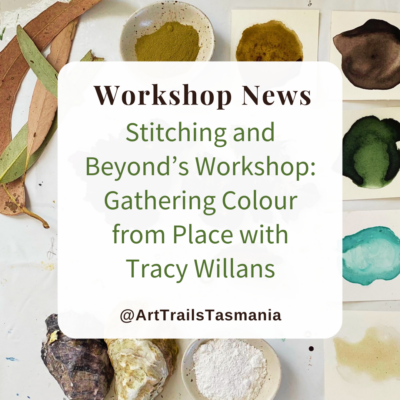
Stitching and Beyond’s Gathering Colour from Place Workshop
Colour Workshop Have you ever looked around where you live and wished that you could transfer not just the shapes but especially the colour to your art? The beautiful greens of the eucalypts, right through to the gorgeous colours of the exotic flowers in your garden?...
12 Ways to Explore Your Creativity and Strengthen Creative Courage – Part 2
12 Ways for Exploring Your Creativity and Unlocking Creative Courage To explore your creativity with more depth and intention, it helps to build on what you have already discovered about creative courage and how it shows up in everyday life. In Part 1, Explore Your...
Explore Your Creativity and Build Creative Courage in Every Day Life Part 1
Be Brave, Explore Your Creativity Explore your creativity in ways that feel both meaningful and gently challenging, because creative courage is not something you wait for, it is something you practise. In everyday life, from long awaited for studios to kitchen...
Calendar of Knitted Wire Bracelet Workshops
Have Fun Making Knitted Wire Bracelets This is a beginners knitted bracelet lesson. Learn how to knit your own bracelet or for a special gift. You will be using wire and seed beads in this lesson it is how to use the wire and hold the beads in place. You must know to...
Read What Our Members Say About Belonging
Join the growing, supportive artists community today and have your Artist story told here.
Belinda is doing a great job creating a professional looking artist hub online. Check out the profile I posted recently to see how well she does them. To all my artist friends let’s help make this THE go to place to discover local artists.
You won’t regret joining Art Trails Tasmania . It’s a welcoming community for creatives at any career stage.Becoming an Art Trails Tasmania member wasn’t a hard decision for me to make as it’s such a wealth of knowledge and support.Being member provides a quality way to showcase your creative endeavours and it’s quickly growing in reach.
We operate a home based picture framing business and recently joined Art Trails Tasmania as a means to giving us exposure to the wider artist community. We have almost immediately seen increase in activity thru our online sites, which I am certain will lead to more opportunities to grow our business.